
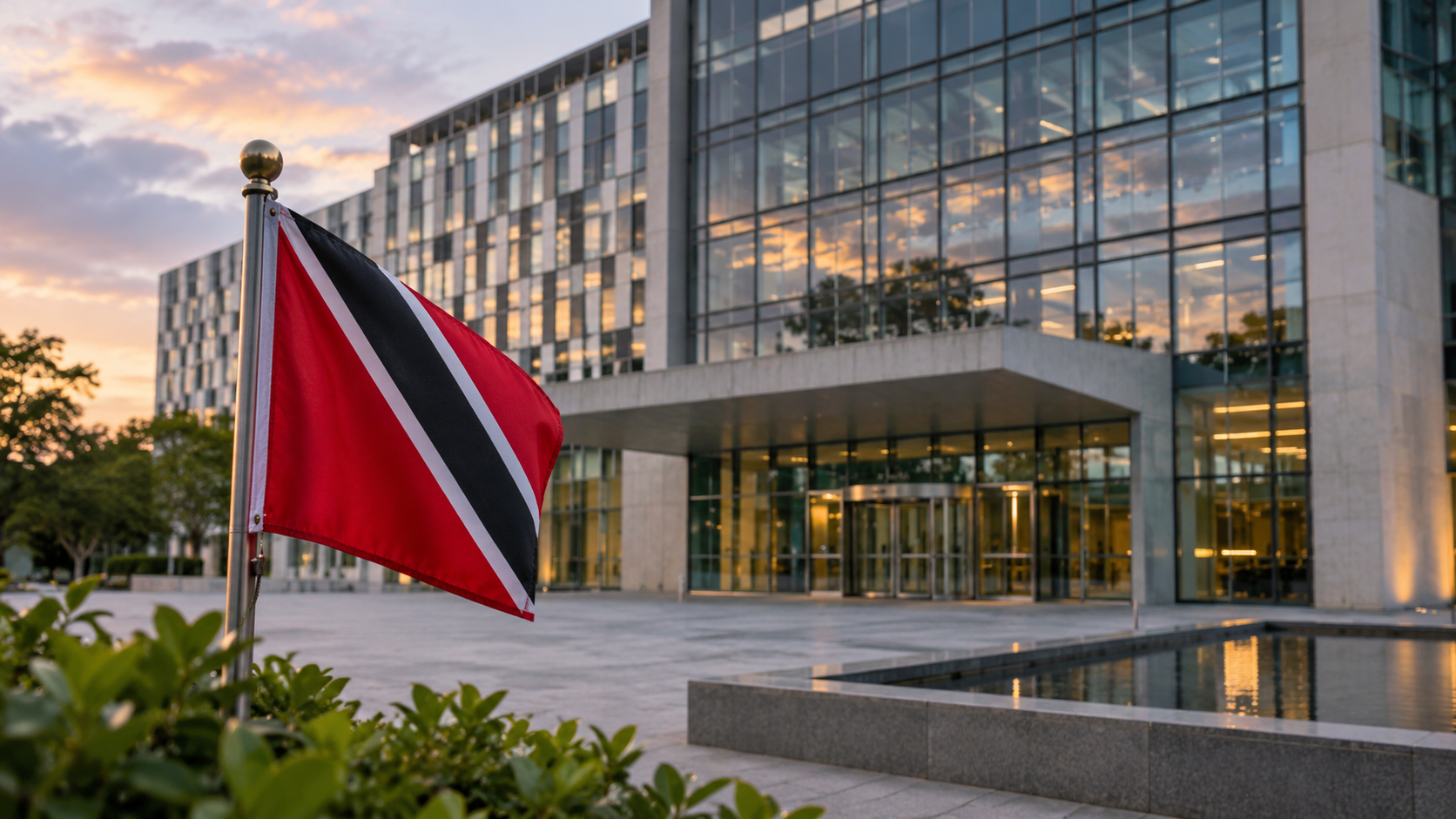
Trinidad and Tobago’s decision to abstain from a United Nations General Assembly vote on the International Criminal Court has prompted calls for the Government to explain how the position fits the country’s longstanding support for international justice.
The resolution, A/81/L.11, was adopted on November 2 by 93 votes to 13, with 36 abstentions. It concerned the ICC’s annual report covering August 1, 2025, to July 31, 2026. The United States, Russia, Israel and Argentina were among the countries voting against it, according to Caribbean Media Corporation reporting.
Former foreign affairs minister and Opposition Senator Amery Browne criticised the abstention and called for an explanation. The issue has historical significance for Trinidad and Tobago: former prime minister ANR Robinson’s 1989 intervention at the UN helped revive the proposal that eventually led to the Rome Statute in 1998.
Guardian Media reported on November 4 that former foreign affairs minister Winston Dookeran expressed concern about distancing the country from that diplomatic legacy. Political analyst Winford James said the reasons for the decision and its consequences needed examination, while acknowledging the pressures smaller states face in relationships with larger powers.
Movement for Social Justice leader David Abdulah questioned whether the abstention signalled closer alignment with Washington. That is a political assessment, not an established explanation of the Government’s motives.
Guardian Media said it was awaiting a response from Foreign and Caricom Affairs Minister Sean Sobers. The unresolved issue is the policy rationale behind the recorded vote and how the Government intends to describe its future relationship with the court.
Sources: Guardian Media, Nov. 4; Caribbean Media Corporation, Nov. 3.
Editor’s note: Vote details are corroborated by Guardian and CMC; do not describe speculation about foreign influence as fact.
Leave a Reply