
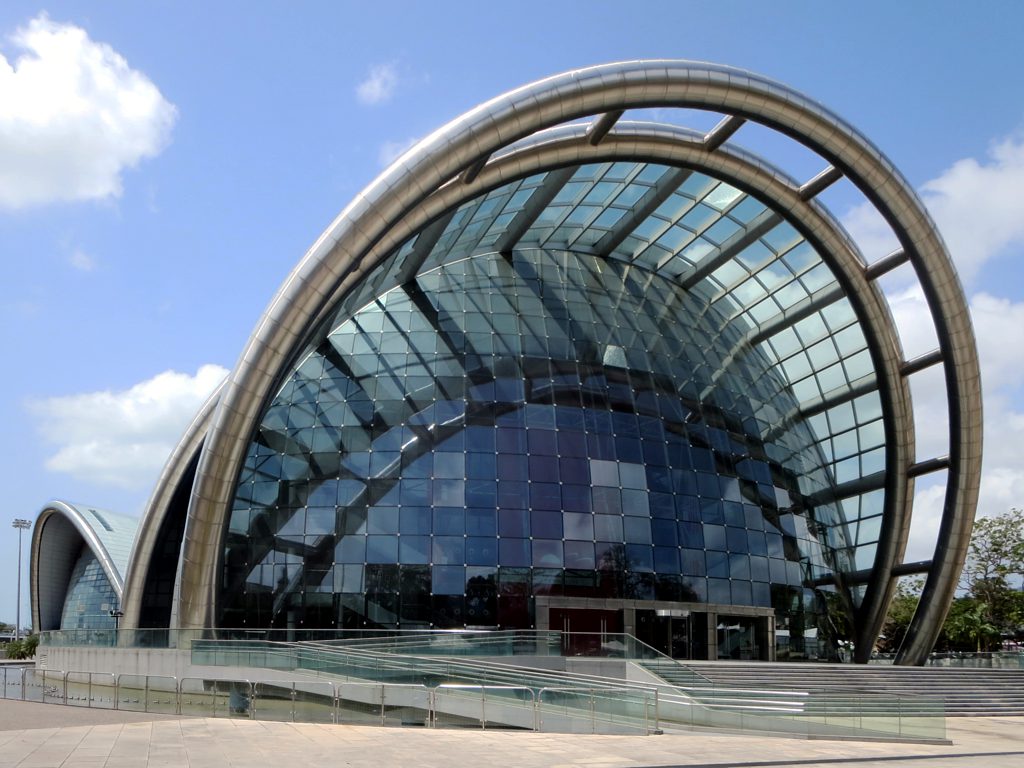
File photograph of the National Academy for the Performing Arts in Port of Spain, February 15, 2014. The NSSEC programme listed its 2026 closing ceremony at NAPA. This is not a photograph of that event. Photo: David Stanley / Wikimedia Commons, CC BY 2.0. Image resized for display. Image source · Licence.

By Tito Baron Media News Desk
Students received trophies, laptops, other digital devices and certificates on Tuesday as the National Secondary School Entrepreneurship Competition marked its tenth edition in Trinidad and Tobago.
The November 10 celebration recognised participants in a programme that introduces Forms Four to Six students to business decisions through a six-week simulation. TTT News reported that scores of students were honoured.
During the competition, teams operate simulated companies, making decisions about products, staffing, pricing and cash management. They respond to changing market conditions and competing businesses as the exercise progresses.
The competition uses ILS Marketplace Live, covering marketing, manufacturing, sales, finance and human resources. Performance is assessed through a balanced scorecard rather than profit alone, encouraging teams to consider the wider health of their businesses.
The organiser’s published format provides 16 divisions of eight teams, or 128 team places. Schools may nominate up to five students and a teacher representative. Participation is free, and the programme is delivered by 3Stone Research and Consulting Ltd with the endorsement of the Ministry of Education.
At the anniversary event, Shell Community Relations Adviser Gregory Sloane Seales emphasised lessons that extend beyond running a business and expressed pride in the students’ achievements, according to TTT News.
Guardian Life of the Caribbean Vice-President of Sales Gregg Mannette said more than 5,000 young people had received training through the programme. Massy Foundation Group Senior Vice-President Nadia McCarthy highlighted its role in creating opportunities across schools and communities.
The organiser traces the competition’s beginnings to 2017, when 320 students participated. It says the programme expanded in 2019 to 640 students across 128 teams, and its current website reports more than 5,440 students trained over its history.
The tenth edition placed those business lessons alongside a celebration of sustained participation. For the students, the simulation offered a structured setting to test decisions, work in teams and see how one part of a business can affect another.
Leave a Reply