
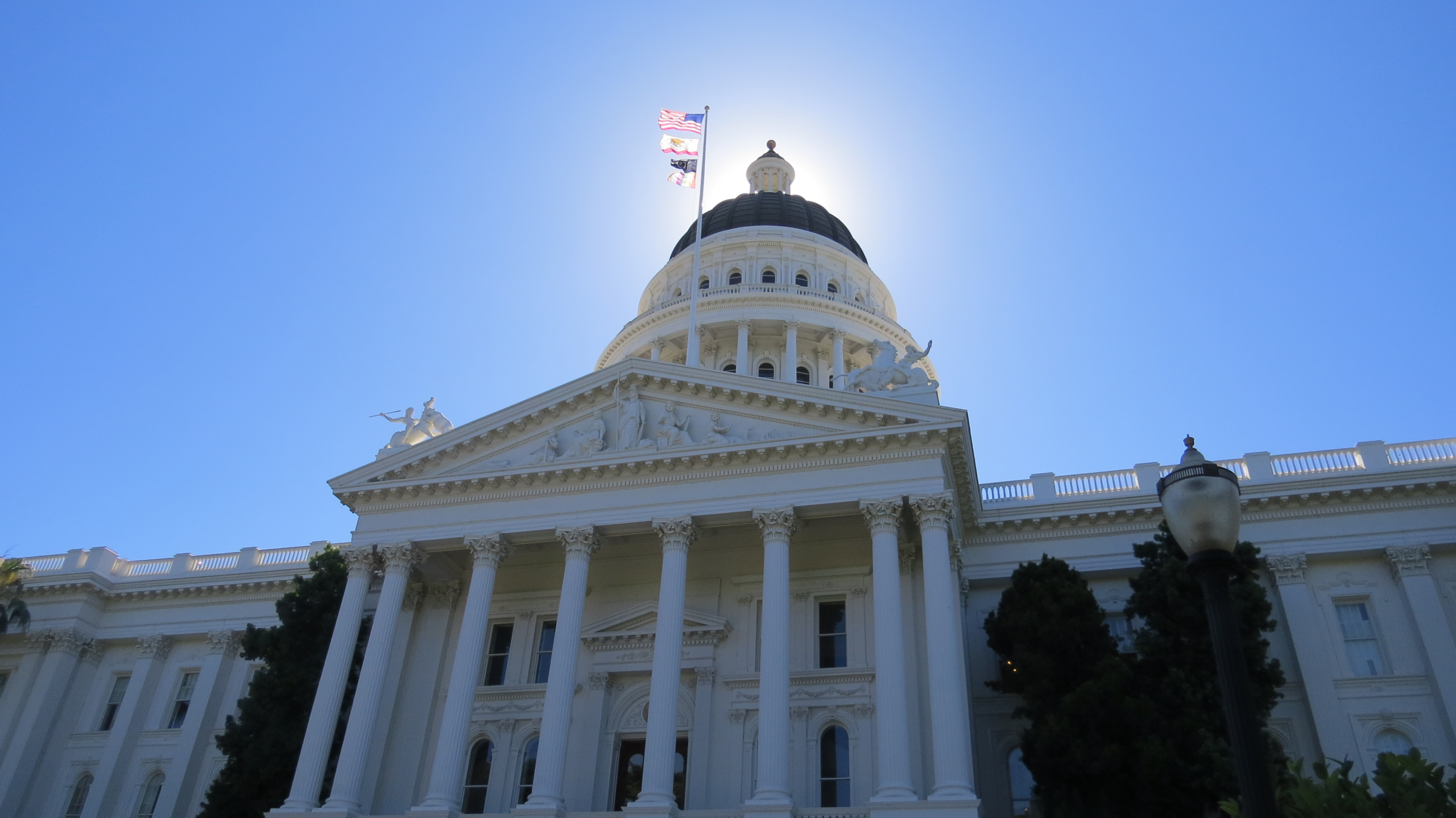
Photo: The California State Capitol in Sacramento, June 22, 2021. File photograph by Mackinacbridge via Wikimedia Commons, CC0 public domain. It does not depict the 2026 election.

News analysis | November 10, 2026
California chose a Democratic governor while turning down a tax on billionaires. The crucial detail: Xavier Becerra opposed that tax, too.
California voters rejected Proposition 40, the proposed one-time billionaire wealth tax, while giving Democrat Xavier Becerra a commanding victory over Republican Steve Hilton. The comparison reveals the limits of treating a vote for a party as approval of every policy backed by that party.
The Associated Press called the measure’s defeat at 6:28 p.m. Pacific on November 9, according to KQED’s election results. AP had called the governor’s race for Becerra on election night, November 3.
The votes, side by side
The California Secretary of State’s unofficial returns, reported at 2:39 p.m. Pacific on November 10, showed:
Governor
Xavier Becerra (Democrat): 7,490,333 votes (65.7%).
Steve Hilton (Republican): 3,906,397 votes (34.3%).
Proposition 40: One-time billionaire wealth tax
Against the measure: 5,944,859 votes (52.8%).
In favor of the measure: 5,318,069 votes (47.2%).
Proposition 3: Extending existing high-income tax rates
In favor of the measure: 6,771,346 votes (60.6%).
Against the measure: 4,407,246 votes (39.4%).
Sources: official governor returns and official ballot-measure returns. These are separate contests with different vote totals, not a survey tracing how individual voters marked their ballots.
Becerra also said no
In the September 30 televised debate, Becerra was asked directly how he would vote on the wealth tax. “I’m going to vote no,” he said. He argued that billionaires should contribute more but criticized a one-time levy as an unreliable way to finance continuing public needs. Hilton also opposed the measure, saying it would drive tax revenue out of California. Their positions are recorded in CNN’s debate transcript.
The divide ran through Democratic politics. KQED lists the California Democratic Party, Sen. Bernie Sanders and Rep. Ro Khanna among Proposition 40’s supporters, while Becerra and outgoing Gov. Gavin Newsom opposed it. A Becerra vote combined with a no vote on this measure was therefore consistent with the winning candidate’s stated position.
What voters rejected
Proposition 40 would have imposed a one-time tax equal to 5% of the net worth of billionaires who were California residents on January 1, 2026. Real estate, pensions and retirement accounts generally would have been excluded. Ninety percent of the money was designated for healthcare, with the remainder for education, food assistance and administration.
The Legislative Analyst’s official assessment projected a temporary gain of tens of billions of dollars over several years. It also warned of a possible continuing income-tax revenue loss, probably less than $1 billion annually, as affected taxpayers changed their behavior, including potentially leaving the state. Those were forecasts, not established outcomes.
Supporters presented the tax as a way to protect healthcare against federal spending cuts. Opponents questioned its design and its effects on future revenue. The result alone cannot establish which argument persuaded each voter.
Departures began before election day
The proposed 5% levy applied to accumulated net wealth, including business ownership interests. It was not a 5% tax on a company’s revenue or profits. The January 1 residency date also meant that leaving shortly before the November vote would not, by itself, have erased liability.
Some wealthy business figures did act before the election. Bloomberg Tax reported in September that Google co-founders Larry Page and Sergey Brin, along with investor Peter Thiel and others, had left before the cutoff. Its report also cautioned that claims of changed tax residency would face scrutiny of personal and business ties. Reported departures are not final tax determinations.
Business expansion elsewhere also needs to be distinguished from a complete California exit. Thiel Capital’s December 31, 2025 announcement said its new Miami office would complement existing Los Angeles operations. That does not establish that the firm shut down in California. Nor do these examples establish that every business relocation was caused by Proposition 40.
No blanket rejection of taxes on the wealthy
Proposition 3 complicates a simple anti-tax reading. Its lead showed substantial support for making existing higher income-tax rates permanent. The official analysis says those rates currently apply to the top 2% of taxpayers and otherwise expire in 2031. A tax on annual income and a one-time levy on accumulated wealth ask voters to approve different policies.
Los Angeles County illustrates the gap without proving individual voting patterns. In its November 9 update, Becerra had 73.22% while Proposition 40 had 54.99% support, according to the county’s official returns. The county favored both, but the candidate’s coalition was substantially wider.
The statewide verdict gives Becerra a strong electoral mandate while withholding this particular revenue source. It leaves him to explain how his approach to taxes will fund the services he promised to protect. For both parties, the lesson is to read the candidate results and the policy results together before claiming voters endorsed an entire agenda.
Count status: Results remain unofficial. All precincts reporting does not mean every ballot has been counted. County final results are due December 3; state certification is scheduled for December 11, according to the Secretary of State.
Leave a Reply