
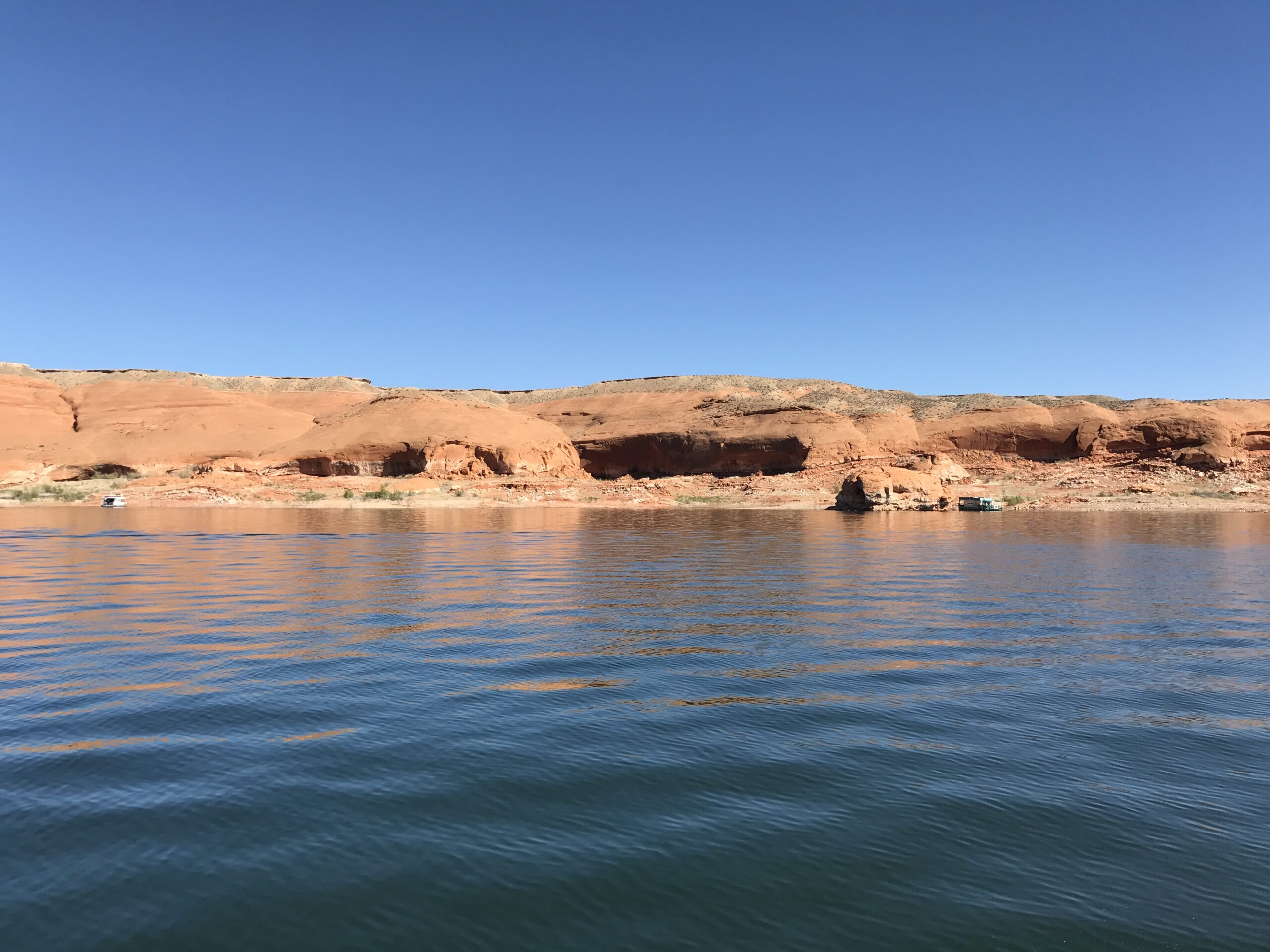
Recent storms have delivered a welcome increase in water to Lake Powell, but the improvement does not mean the Colorado River’s long-running water problems are over.
The Associated Press reported Sunday that the reservoir had risen more than 20 feet from its mid-September low following storms in late October and early November. The same weather brought damaging flooding to communities across parts of the Southwest, underlining the difference between a reservoir gaining water and residents experiencing relief.
Federal operational figures show Lake Powell’s elevation rising from 3,532.42 feet on November 1 to 3,538.56 feet on November 7. Reported storage increased from approximately 5.982 million to 6.359 million acre-feet over that period. The Bureau of Reclamation cautions that its automatic reports have not been checked for errors.
Sarah Porter, director of Arizona State University’s Kyl Center for Water Policy, told Arizona’s Family that the additional water helps provide more room above levels needed for hydropower production at Glen Canyon Dam. However, she cautioned that the reservoir was still around levels that had generated concern earlier in the year.
Low water can affect both power generation and the movement of water downstream. Porter said a much stronger snowpack would be needed to improve the river system’s position substantially.
The recent rise is therefore encouraging, but it should not be mistaken for a lasting resolution of drought or a guarantee of increased water availability. Winter conditions and subsequent runoff will remain important to the outlook.
Photo: Lake Powell. USGS archive photograph, 2017; not a depiction of November 2026 water levels. Public domain.
Sources: Associated Press; Bureau of Reclamation reservoir data; Arizona’s Family; USGS photograph.
Leave a Reply