Trinidad and Tobago’s final court of appeal has ruled that laws criminalising private, consensual same-sex intimacy violate fundamental constitutional rights, delivering a unanimous victory to activist Jason Jones.
The Judicial Committee of the Privy Council allowed Jones’s appeal on Tuesday, November 10, and dismissed the Attorney General’s cross-appeal. The five-member Board found that sections 13 and 16 of the Sexual Offences Act 1986 could not constitutionally be applied to private, consensual sexual relations between adults of the same sex.
The constitutional ruling is decisive, but the precise wording of the final remedy remains to be settled. The Board invited further written submissions and said its provisional view was to uphold the narrower relief granted by the High Court in 2018. It did not order the wholesale deletion of both sections in Tuesday’s judgment.
A unanimous ruling
Lords Sales and Burrows delivered the judgment, with Lord Reed, Lord Briggs and Lady Rose agreeing. The decision, [2026] UKPC 38, reverses the outcome of the Court of Appeal’s majority ruling of March 25, 2025, which had overturned Jones’s High Court victory.
At the centre of the case were the offences commonly described as “buggery” and “serious indecency”. Jones challenged their application to consensual adult intimacy, arguing that the criminal prohibitions infringed rights guaranteed by Trinidad and Tobago’s Constitution.
The Board’s reasoning placed particular weight on respect for private and family life. The freedom to develop an intimate relationship, it explained, concerns a deeply personal part of an individual’s identity. Criminal restrictions on that freedom require constitutional justification.
The judgment concluded that the challenged provisions must be interpreted subject to the Constitution so that they do not criminalise private, consensual same-sex sexual relations between adults.
Why the savings clause did not protect the laws
A central legal dispute concerned section 6 of the Constitution, often called the savings clause. It protects certain existing laws from constitutional challenges, a provision that has featured prominently in litigation over legislation inherited from the colonial period.
The State’s case relied on the relationship between the 1986 Sexual Offences Act and earlier offences in the 1925 legislation. The Privy Council rejected the argument that the challenged provisions were simply protected re-enactments of the old law. It treated the 1986 provisions as new law, rather than as legislation insulated by the savings clause.
The Board also considered the separate protection claimed under section 13 of the Constitution for legislation passed with a special parliamentary majority. That procedure did not settle the case: the legislation still had to satisfy the constitutional requirement of being reasonably justifiable in a society that properly respects individual rights and freedoms.
That assessment, the court held, must take account of present circumstances. It could not be fixed permanently by the position when Parliament passed the Act in 1986. The Attorney General had not supplied evidence sufficient to justify retaining the restrictions on private consensual adult intimacy.
The long route to the final appeal
Jones filed his constitutional claim on February 23, 2017. High Court judge Devindra Rampersad ruled in his favour on April 12, 2018, and addressed the remedy on September 20 that year.
The Court of Appeal’s majority decision in March 2025 reversed that result. Jones then took the case to the Privy Council, which remains Trinidad and Tobago’s final appellate court. The Board heard the appeal on July 8, 2026.
Tuesday’s ruling resolves the constitutional arguments in Jones’s favour after more than nine years of litigation. It also rejects the Attorney General’s effort, through the cross-appeal, to overturn the findings of unjustified interference with constitutional rights.
Legal team welcomes the outcome
Freedom Law Chambers, headed by Anand Ramlogan SC, welcomed the decision in a statement reported by the Trinidad Guardian. The chambers described gay rights as part of the wider protection of human rights and praised Jones’s perseverance throughout the challenge.
The statement also acknowledged the remaining submissions on the precise remedy. That distinction is important: the Board has determined that the criminal provisions cannot constitutionally cover the private consensual conduct at issue, while the final legal wording still requires an additional step.
What remains to be decided
Jones sought the removal of the challenged sections in their entirety. The Board instead indicated a provisional preference for the High Court’s approach, which exempted consensual adult conduct while leaving criminal prohibitions outside that protected category in place.
The ruling concerns criminalisation of private consensual adult intimacy. It should not be read as a judgment legalising non-consensual conduct or as a ruling on same-sex marriage. The next step in this case is the settlement of the remedial order following the parties’ written submissions.
Reporting based on the official case record, the Privy Council’s press summary and judgment, and the Trinidad Guardian’s report of the legal team’s response.
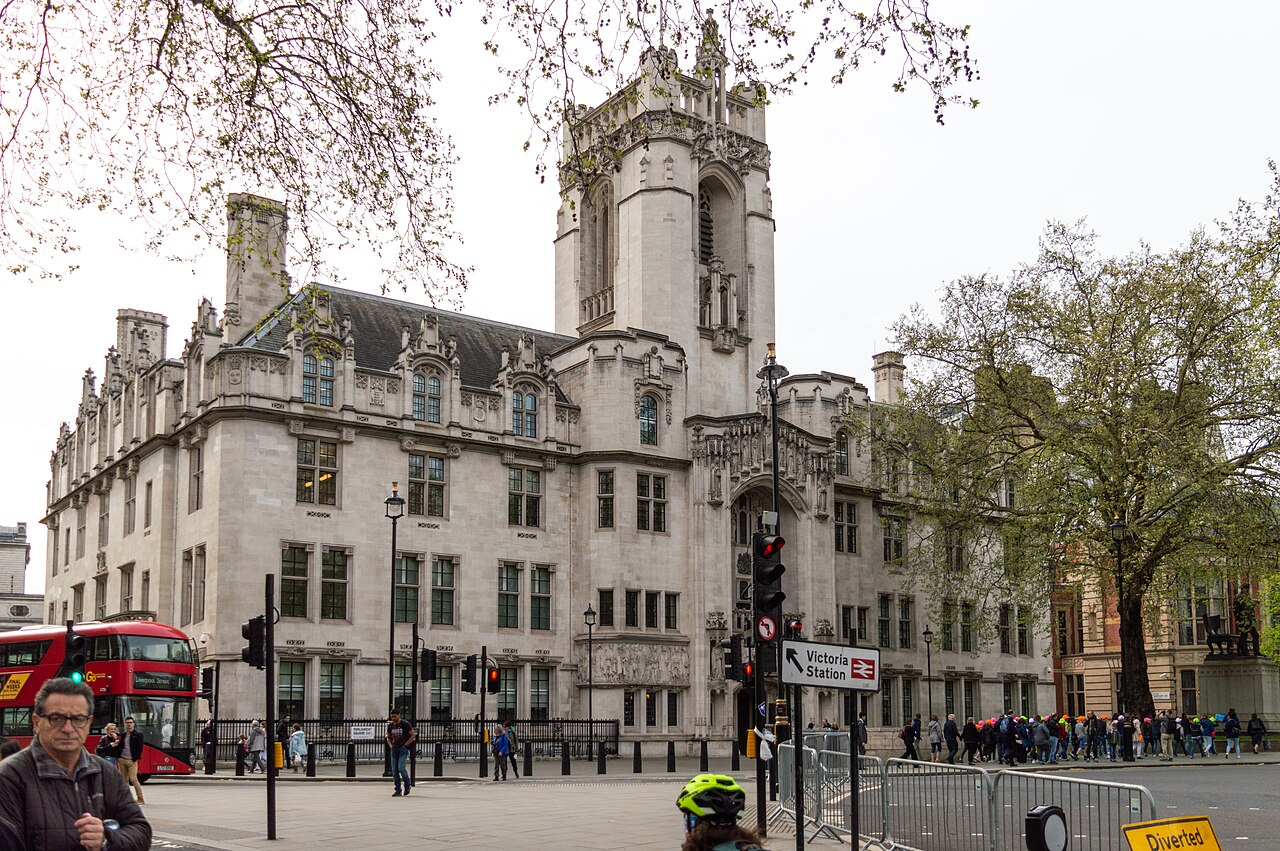
Featured image: Middlesex Guildhall in London, April 2018, an archive photograph rather than an image of Tuesday’s proceedings. Photo: Tristan Surtel / Wikimedia Commons, CC BY-SA 4.0. Resized.

Leave a Reply