
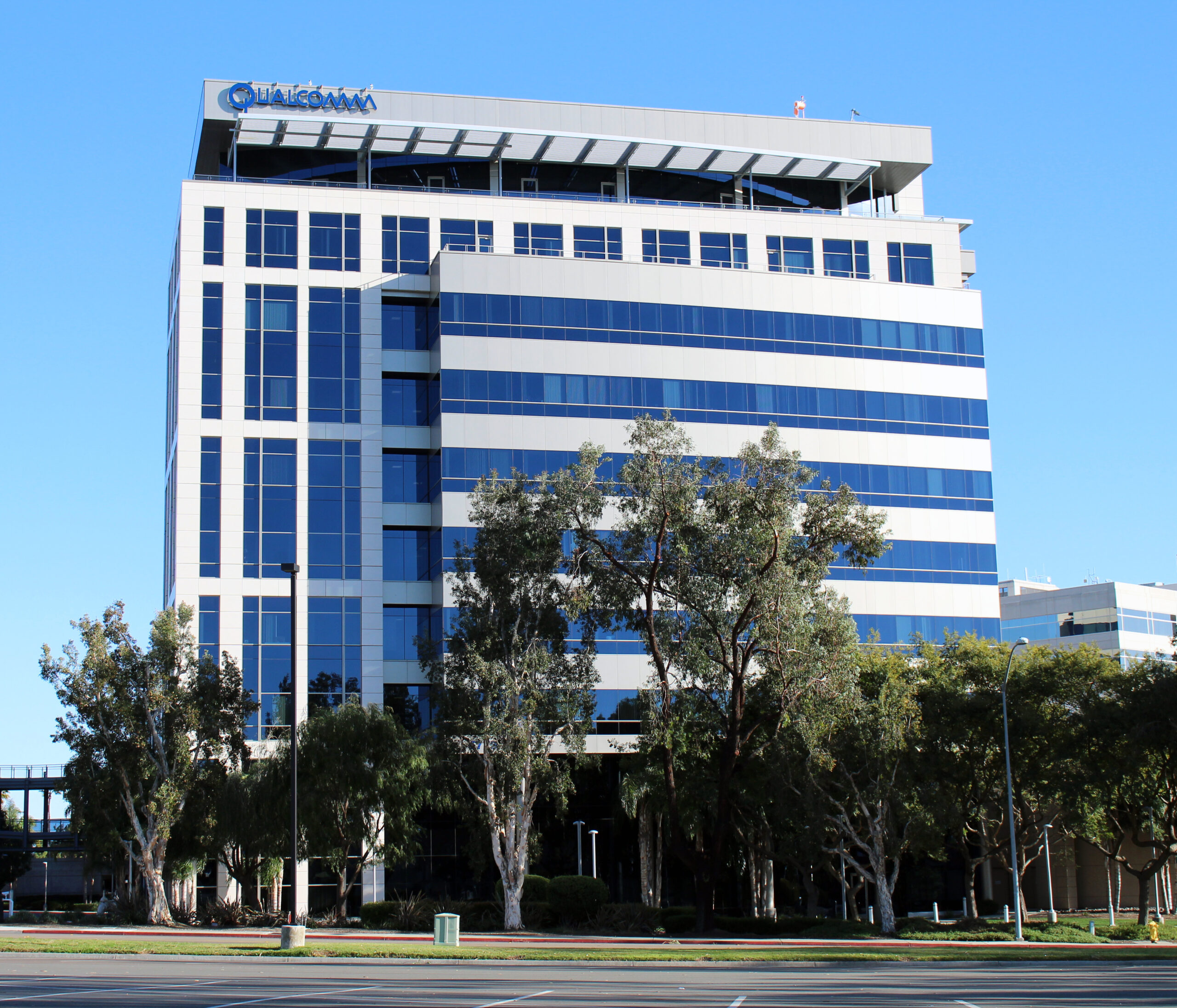
Qualcomm’s headquarters in San Diego, photographed on December 26, 2015. Archive image, not the November 2026 earnings announcement. Credit: Coolcaesar / Wikimedia Commons / CC BY-SA 4.0. Image source · License. Unmodified.

By Tito Baron Media News Desk
Qualcomm’s latest results show how difficult it remains to replace lost smartphone-chip sales, even as the company expands rapidly in automotive technology.
Revenue for the fiscal fourth quarter ended September 27 fell 8% from a year earlier to US$10.322 billion, according to the company’s November 4 earnings release. Handset-chip revenue declined 26% to US$5.137 billion, while automotive revenue rose 89% to US$1.990 billion.
The contrasting figures put the company’s diversification strategy in perspective: faster-growing businesses are becoming more important, but handsets still have considerable influence over quarterly performance.
Qualcomm reported quarterly net income of US$1.251 billion, compared with a year-earlier loss. Its adjusted net income, which excludes specified accounting items, fell 28% to US$2.332 billion. The return to an accounting profit therefore should not be read as an equivalent improvement in underlying trading.
The company also disclosed a US$5.7 billion tax benefit in its full-year figures. That annual item is important when comparing reported earnings across years.
Reuters reported on November 5 that rising memory costs and slowing smartphone sales were adding pressure. The news agency said brokerages saw longer-term promise in automotive and data-center chips, but remained concerned about near-term earnings as Apple-related revenue declined and input costs rose.
Chief executive Cristiano Amon told Reuters that Android demand had improved sequentially and that Qualcomm had prepared early for the memory shortage. Those comments offer management’s view, rather than proof that the handset downturn has ended.
Qualcomm maintained its fiscal 2027 data-center revenue target of US$5 billion. Whether that anticipated expansion can offset handset weakness remains a central question for its next reporting periods. The target is a forecast, not revenue already earned.
Leave a Reply