
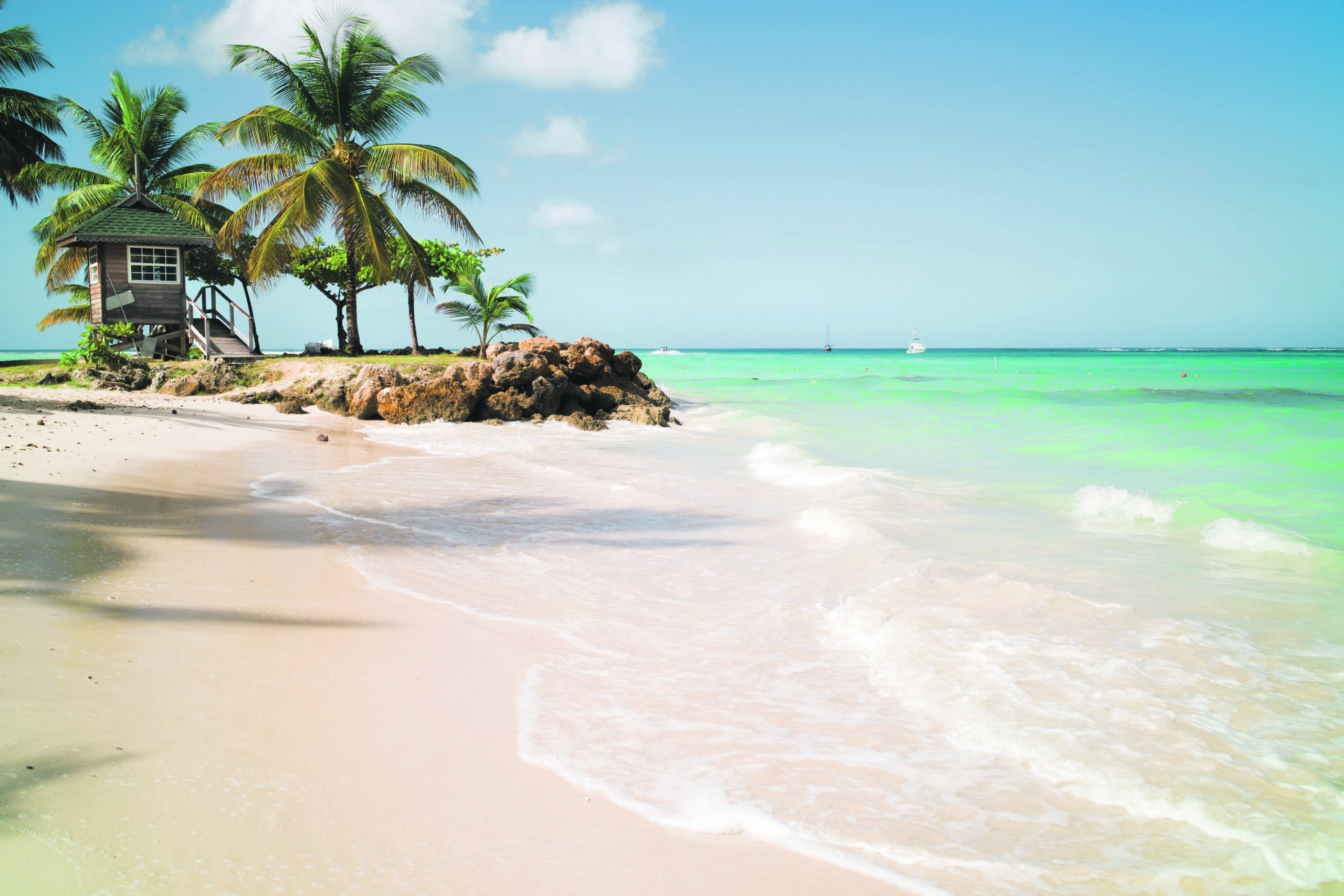
Featured photo: Pigeon Point, Tobago. Photo: Tobago Tourism Agency Limited.
COUNTRY PROFILE | From an energy industry connected to global markets to steelpan, fine-flavour cocoa and protected tropical landscapes, Trinidad and Tobago offers a combination of industrial capability and cultural originality that deserves a closer look.
A steel orchestra turns metal into melody. Scientists work to authenticate fine-flavour cocoa. Gas-processing plants supply international markets, while a forest protected since the eighteenth century shelters another kind of national wealth. Trinidad and Tobago’s most interesting story is the relationship between these worlds: a Caribbean country that creates, manufactures, researches and performs as well as welcomes visitors.
Two islands, one layered identity
The republic sits at the southern end of the Caribbean, close to Venezuela. Trinidad is the larger and more populous island, home to the capital, Port of Spain; Tobago contributes its own village traditions, coastal communities and ecological treasures. The Ministry of Foreign and CARICOM Affairs describes a country covering approximately 5,128 square kilometres, comprising the two main islands and numerous smaller islands. That compact geography brings striking contrasts within reach, from urban commercial life to forests, wetlands and fishing communities.
The islands reward different kinds of attention. Port of Spain offers architecture, performance and an urban cultural calendar; central Trinidad adds religious heritage and an industrial landscape. Tobago invites a closer look at coastal villages, forest trails and the relationship between communities and the sea. Together, they offer considerably more than a choice between a business trip and a beach holiday.
Port of Spain and Waterloo: history in the landscape
Around Queen’s Park Savannah, Trinidad’s built heritage provides a different introduction to the country. Tourism Trinidad’s architectural guide describes the Magnificent Seven, a group whose contrasting designs reward more than a passing glance. Stollmeyer’s Castle, or Killarney, drew inspiration from Scotland’s Balmoral Castle. Queen’s Royal College combines a red facade and clock tower with open corridors and galleries adapted to a tropical climate. These are not interchangeable colonial buildings: their details show imported influences being interpreted for a Caribbean setting.
Further into central Trinidad, Waterloo’s Temple in the Sea offers a more intimate account of determination. The National Trust recounts how Siewdass Sadhu’s first shore-side temple was demolished after being built on privately owned land. He then built out into the sea, carrying materials by bicycle. The temple stands on a man-made island connected to the mainland by a pedestrian causeway; the Trust records a rebuilding in 1995. The setting is visually memorable, but the history of devotion and persistence gives it meaning. It remains a place of worship, not merely a photographic stop.


Energy expertise with international reach
Natural gas is central to Trinidad and Tobago’s economic identity, but its significance extends beyond extraction. The Ministry of Energy and Energy Industries describes a connected system in which gas supports liquefied natural gas, petrochemicals, electricity generation and heavy industry. Ammonia and methanol production illustrate how a natural resource becomes an input into internationally traded products.
Gas becomes more than an export at the point where it enters a factory or powers an industrial process. That gives Trinidad and Tobago a position in several supply chains rather than only one commodity market. The Ministry’s account links LNG with petrochemicals and heavy industry, a useful corrective to the idea of the Caribbean as an economy built solely around visitors. Technical competence, processing infrastructure and reliable energy supply are central to this identity.
La Brea: a natural resource you can see
At La Brea in southwestern Trinidad, the country’s resource story becomes a landscape. The Pitch Lake is an expanse of naturally occurring asphalt, its dark surface interrupted by water and vegetation. The country’s submission to UNESCO’s Tentative List describes approximately 100 acres of pitch, with a slow stirring movement that can bring buried objects back to the surface. It calls the lake the world’s largest commercial deposit of natural asphalt. This is a Tentative List entry, not a World Heritage inscription.


The attraction is the contrast: a substance associated with roads and industry emerging as a natural phenomenon. A visit with a knowledgeable local guide offers a different way of understanding Trinidad, one in which geology, economic history and landscape are inseparable.
Finance: resilience, savings and realistic expectations
The financial picture contains both assets and pressures. In its May 2026 assessment, the International Monetary Fund described resilient non-energy activity and a well-capitalised banking system. It also identified the Heritage and Stabilisation Fund as a substantial national asset, equivalent to about a quarter of GDP at the time of its assessment.
Those strengths sit alongside fiscal deficits, rising public debt and declining international reserves. The IMF’s 2026 growth projection was modest, not a forecast of a boom. These distinctions matter: Trinidad and Tobago has financial institutions and accumulated savings that are real advantages, but energy volatility and economic reform remain part of the story.
More recently, the Central Bank’s November 2026 announcement of its Financial Stability Report said the financial sector remained resilient in 2025, citing capital adequacy, asset quality and profitability. That is evidence about the condition of the financial system, not a promise about individual investments or household prosperity.
Beyond energy: making more at home
Diversification is most persuasive when it moves beyond a slogan. The government’s TTBizLink manufacturing information identifies support for research and development, smaller businesses, agro-processing, standards and export readiness. It also highlights the Phoenix Park industrial development near Point Lisas, linking production space with established industrial and port infrastructure.
The industrial setting around Point Lisas gives that ambition a physical focus: factories, production space and access to port infrastructure. Agro-processing offers another route, linking what is grown with what can be manufactured, packaged and exported. Research support and standards programmes address the less visible work of becoming competitive, from product development to meeting buyers’ requirements. These are practical building blocks for a broader economy, not simply a promise to depend less on energy.
Developing skills for industry and creativity
The country’s educational offer reflects its range of ambitions. The University of Trinidad and Tobago’s programme directory includes energy and process engineering, civil infrastructure, maritime studies, agriculture, food technology and information technology. Alongside those fields sit fashion, visual communications, performing arts and digital media.
The directory puts process engineering and maritime studies alongside fashion design, while digital-media courses encompass animation, music technology and game art. UTT also lists an Advanced Pan Fellowship. Few examples capture the country’s character more neatly: an instrument developed locally appears within formal training beside the technical disciplines needed by a modern industrial economy. Its strengths are not divided neatly into either “traditional culture” or “technology.”
Steelpan: creativity made tangible
Steelpan offers one of the clearest expressions of that originality. The Foreign Ministry’s account of the national instrument traces its development through the experimentation of the 1930s and 1940s. Its evolution is a story of practical invention as well as musical achievement: materials were reworked into an instrument with its own expressive possibilities.


A cultural identity built from many inheritances
Trinidad and Tobago’s diversity is not an incidental feature. It is fundamental to the national experience. The government’s cultural overview identifies African, Indian, First Peoples, European, Chinese and Middle Eastern influences among the strands of its heritage. These histories are visible in religious observances, performance, food and community traditions.
Christmas, Divali and Eid are part of a wider cultural calendar that also includes Emancipation observances, Indian Arrival commemorations, Ramleela and other traditions. Music moves across calypso, soca, chutney, tassa, parang and rapso. Costume-making, dance and craft add visual and physical expression to that soundscape.
These traditions also make the calendar a way of reading the country. A visitor arriving for Carnival encounters one expression of public creativity; one arriving around Divali or Christmas encounters others. The styles differ, but each reveals communities making space for memory, belief and celebration. Reducing the national identity to one festival would miss the variety that sustains it throughout the year.
The 2011 census gives a dated statistical picture of that diversity: approximately 35.4% of the population identified as East Indian, 34.2% as African and 22.8% in the two mixed-ethnicity categories combined. Smaller groups included Chinese, Caucasian, Indigenous, Portuguese and Syrian/Lebanese communities; some respondents did not state an ethnicity. These are 2011 figures, not a current population estimate, and categories cannot convey the full texture of family and cultural life.
Carnival: the nation takes to the streets
Carnival brings another form of creative production into public view. The official tourism account of the season describes a wider programme of music, performance and costume, including steelband competition and calypso events. The street celebration is the most visible moment, but it rests on preparation, rehearsal, design and skilled work.
For an international audience, this is an opportunity to see culture as an active industry rather than decoration. The finished performance matters, but so do the musicians, makers and organisers who bring it into being. Understanding that process gives the celebration greater depth.
The Airports Authority’s Carnival guide locates the main celebration on the Monday and Tuesday before Ash Wednesday. J’ouvert brings revellers into the streets before dawn, often with mud, paint or powder; the later parade of mas brings elaborate costume and colour. Traditional characters such as the Midnight Robber, Pierrot Grenade and stilt-walking Moko Jumbie show that Carnival also has a theatrical vocabulary, not just a soundtrack. For newcomers, learning a little about these traditions makes the spectacle more rewarding.


Cocoa: agriculture meets research and premium identity
A smaller crop offers a particularly revealing example of innovation. Trinitario cocoa connects Trinidad and Tobago’s agricultural history with food science, branding and specialised international markets. In March 2026, UWI Today reported on a certification initiative involving the government, the Cocoa Development Company and The University of the West Indies’ Cocoa Research Centre.
The initiative seeks to distinguish Trinidad and Tobago Trinitario Fine Flavour Cocoa through verified origin and quality. Scientific tools, including genetic and chemical approaches, support the effort to protect authenticity and strengthen traceability. The commercial ambition is to help local cocoa earn recognition for its distinctive qualities rather than compete only as an undifferentiated commodity.
The story has implications beyond chocolate. Identifying origin, documenting quality and protecting a product’s reputation can help smaller producers compete on something other than volume. In this case, a crop becomes a meeting point for farmers, laboratory researchers and food businesses. It gives the phrase “local flavour” a scientific as well as a culinary meaning.
Food that tells the country’s story
Food provides an accessible introduction to the same diversity. Tourism Trinidad’s cuisine guide highlights doubles, roti, bake and shark and a wide range of street foods. Doubles combines fried bara with curried channa; the attraction is both the familiar combination and the individual vendor’s balance of accompaniments.


At Maracas, bake and shark is closely associated with a beach outing. Elsewhere, coconut water, tamarind balls, toolum, sugar cake and snow cones offer different tastes of everyday food culture. The dining landscape also includes Chinese, Indian, Middle Eastern and international influences, so a culinary visit need not be confined to one style of cooking.


The tourism authority’s account of Indo-Trinidadian cooking adds dishes and accompaniments such as dhalpuri, buss up shut, curried duck, channa and aloo, and mango talkarie. These are not simply imported labels: they belong to a local food culture shaped by generations of adaptation. Tobago’s crab and dumpling adds another distinctive expression to the national table.
Champions and cultural milestones
International sport has supplied moments that remain part of the national memory. Hasely Crawford’s 100-metre victory at Montreal 1976 brought the country its first Olympic gold. Keshorn Walcott followed with Olympic javelin gold in 2012 and, thirteen years later, the 2025 world title in Tokyo. Cricket has its own towering figure: Trinidad-born Brian Lara scored 400 not out against England in Antigua in 2004, the highest individual innings in Test cricket. Football’s Soca Warriors made their World Cup debut in 2006.
Global pageants have also carried the country’s name abroad. Janelle Commissiong won Miss Universe in 1977, and Wendy Fitzwilliam in 1998. Giselle Laronde won Miss World in 1986. The organisations’ archives preserve distinct achievements by three women, rather than an interchangeable list of titles.
Nature beyond the beach
A beach photograph is an inviting starting point, not a complete tourism plan. The Airports Authority’s attractions guide points visitors towards Maracas, the Caroni Bird Sanctuary, Gasparee Caves and the Pitch Lake in Trinidad, alongside Tobago’s reef and waterfall attractions. The range allows a trip to combine coastline, geology and wildlife rather than repeat the same experience each day.
Tobago’s environmental importance has international recognition. UNESCO’s North-East Tobago Biosphere Reserve profile describes an area bringing together terrestrial and marine environments, including forests, mangroves and coral reefs. Its Main Ridge Forest Reserve has a protection history dating to 1776.
The UNESCO designation is a biosphere reserve designation, not a World Heritage inscription. Its purpose also extends beyond scenery: the relationship between conservation and community livelihoods is central. Fishing, tourism and village life belong within that picture. Thoughtful nature tourism can therefore be understood as an encounter with a living landscape, not an empty backdrop.
Waterfalls and wildlife found nowhere else
Trinidad’s interior offers a quieter counterpoint to the beach. Maracas Waterfall is reached from Waterfall Road in Maracas Valley, St. Joseph. Despite the shared name, it is not at Maracas Bay: the valley waterfall and the north-coast beach are separate outings. Suitable hiking footwear and attention to local conditions make more sense here than treating every attraction as a roadside viewpoint.
Some natural riches are much harder to encounter. The Trinidad piping-guan, known as the pawi, is endemic to Trinidad: its natural range is confined to the island. The government identifies it as an Environmentally Sensitive Species. This forest bird, with its crest and contrasting plumage, gives conservation a distinctly local face. Its rarity is a reason to protect habitat and use responsible guides, not to promise a sighting.

Tobago beyond the familiar postcard
Pigeon Point’s palms and blue-green water are an immediately recognisable image of Tobago. Moving beyond that familiar scene reveals other layers. Above Scarborough, Fort King George combines Atlantic views with surviving evidence of the island’s colonial history. The same tourism authority’s heritage guide points to the remnants of an old sugar estate in Speyside, placing the village within a history of production as well as tourism.
On the northeastern coast, Speyside looks out across Tyrrell’s Bay towards Goat Island and Little Tobago. The latter adds birdwatching to an area already known for its marine setting. These places offer a useful counterpoint to the resort image: a fort above the capital, an estate relic in a coastal village, an offshore island approached for its wildlife. Combined with Main Ridge’s forest, they show how a relatively small island can support several quite different kinds of exploration.
Buccoo Reef and the blue-green shallows
In southwestern Tobago, Buccoo Reef adds an underwater dimension to the island’s appeal. The Buccoo Reef–Bon Accord Lagoon Ramsar site links the reef with a wider wetland setting. Boat excursions also take visitors towards Nylon Pool, the pale, shallow-water setting shown below. Reef and sandbank are different environments, but together they explain why a Tobago visit should make time for the sea as well as the shore. Enjoying these places responsibly means following operators’ conservation guidance and avoiding contact with coral.

New connections and a richer Tobago visit
Connectivity can make those experiences easier to reach. In an October 2026 announcement, the Tobago Tourism Agency highlighted a new weekly Caribbean Airlines nonstop Toronto–Tobago service scheduled to begin on October 25. The announcement also described the island’s new airport terminal and its expanded capacity. Capacity is an infrastructure measure, however, not a count of passengers already received.
Beyond arrival, Tobago offers its own cultural reasons to stay. The agency’s festival guide describes heritage celebrations rooted in village traditions, including wedding customs, food and oral history. These experiences add substance to a visit that might otherwise be limited to swimming and relaxation. They make room for the people of the island, rather than only its views, to become the centre of the story.
On Tobago, crab and dumpling brings the focus back to the sea. The dish is one of the island’s recognisable culinary signatures: a reminder that the two islands share a national table without losing their individual tastes.

Warmth, rainfall and the rhythm of the year
The Trinidad and Tobago Meteorological Service describes a dry season generally running from January to May and a wet season from June to December. Warmth is a year-round feature, but rainfall, humidity and wind change the feel of a day. Late May and December are transition periods; terrain and exposure also create differences between the islands. The country sits at the southern edge of the Atlantic hurricane basin, not outside all storm risk. For visitors, that means checking forecasts rather than assuming that a season guarantees either sunshine or rain.
Everyday life, not just a visitor’s itinerary
The official Trinbago travel guide describes English as the language of daily communication while also recognising local speech and expressions. One useful introduction is “liming”: spending time together socially. It captures an aspect of everyday life that cannot be measured by hotel nights or export earnings.
Markets, shopping areas, family meals, work and community activities all sit alongside the celebrated festivals. Visitors should allow space for ordinary encounters without assuming that one neighbourhood or holiday experience represents everyone. Practical preparation matters too: use reliable local transport and guides where appropriate, check current travel and safety information, and treat protected habitats and community spaces respectfully.
What stays with a closer look at Trinidad and Tobago is not one attraction but a pattern of inventiveness. Steelpan gives it a sound; Trinitario cocoa gives it a flavour; energy engineering gives it industrial reach. At Waterloo, an individual’s determination became a landmark. In Tobago, forests, reefs and village traditions give tourism a deeper setting. The country’s most compelling invitation is to see those achievements together, and to make time for both islands.
About this profile
This feature draws on the linked government, tourism, university, Central Bank, IMF and UNESCO sources. Economic assessments are dated where relevant; forecasts are not presented as realised results. The Tobago photographs are authentic archival images supplied through the Tobago Tourism Agency’s official media library, which permits media use with credit. The Trinidad photographs are individually licensed Wikimedia Commons images; their photographer credits, source pages and Creative Commons licences appear in the captions.
About this positive-focus profile: This feature highlights the country’s strengths, achievements, culture and attractions. That focus does not overlook or minimise the social, economic, public-safety and other challenges that every country faces. It is a selective introduction to what the country offers, not a comprehensive assessment of conditions or risks.
Leave a Reply