
Vermont voters considered Proposal 3 on Tuesday, a constitutional question about how firmly to protect collective bargaining from future changes in state law. The constitutional amendment would strengthen the legal foundation for organizing and negotiating with employers, while its broad language raises a further question: how those protections would apply to workers left outside existing labor statutes. Official proposal; VTDigger
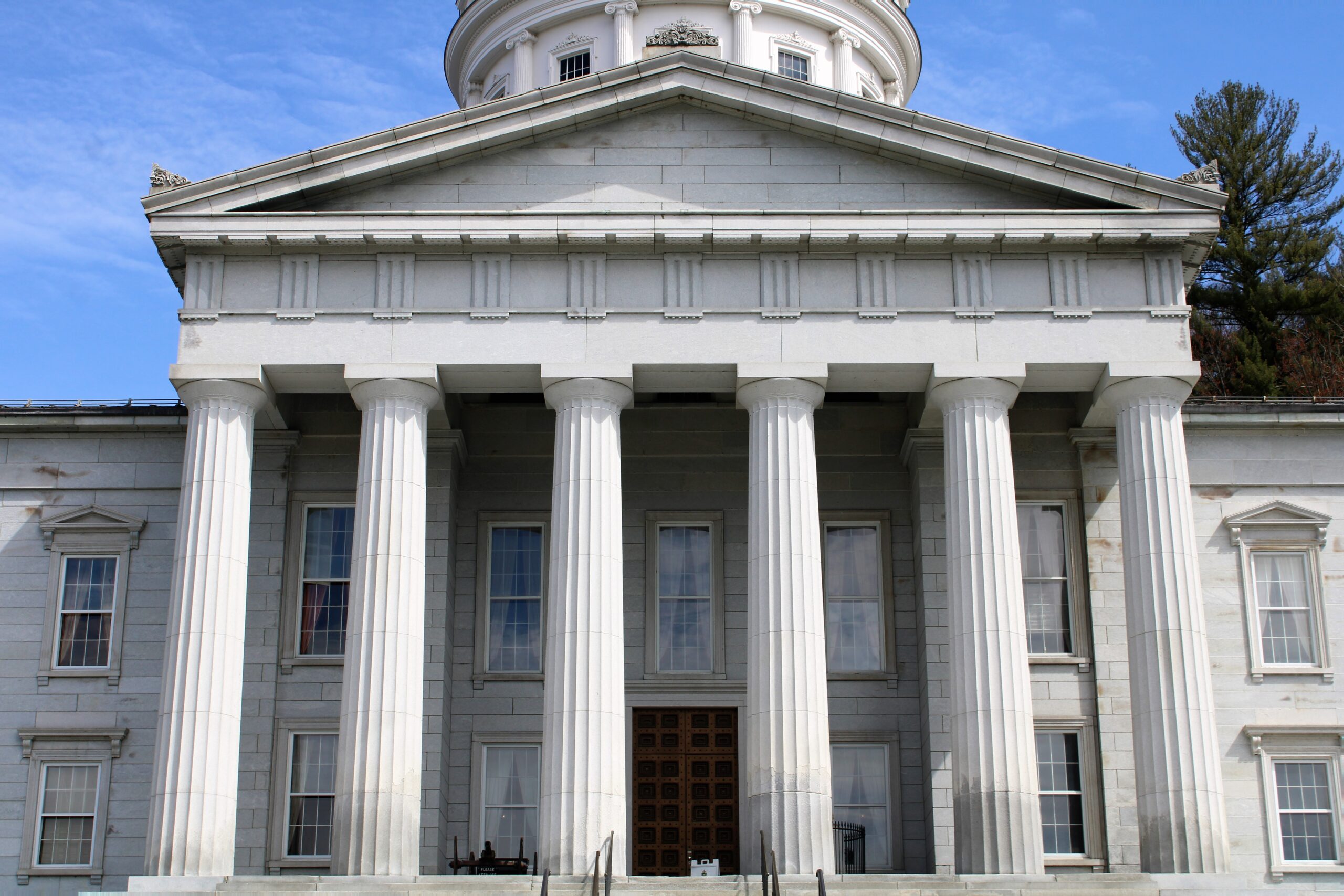
The portico of the Vermont State House in Montpelier on April 23, 2022. Archive photo: Farragutful / Wikimedia Commons, CC BY-SA 4.0. Unmodified.

The proposed article recognizes employees’ right to organize or join a labor organization and bargain through an exclusive representative they choose over wages, hours, working conditions and workplace safety. It would prohibit future laws that undermine those bargaining rights. A second restriction would prevent state lawmakers from banning agreements between employers and unions that make union membership a condition of employment, commonly called union-security agreements. That provision concerns negotiated agreements, rather than automatically enrolling every Vermont worker in a union. Federal limits would continue to apply. Official proposal, final text on page 2
Supporters emphasize durability. Vermont Public reported that backers want constitutional protection against future efforts to weaken labor laws. Its reporting also described opposition from people who favor voluntary union membership and worry about the state’s appeal to businesses. VTDigger reported a more specific concern from Clara Morrison of the free-market Right for Vermont Foundation: the amendment could constrain future labor-policy changes and create legal uncertainty. These are competing arguments about future consequences, not established forecasts of job growth or losses. Vermont Public; VTDigger
Farmworkers illustrate why the amendment’s reach matters. The Vermont State Labor Relations Act excludes agricultural laborers from its definition of an employee. A legislative study committee noted that Proposal 3 contains no comparable exclusion and could be interpreted by courts to provide bargaining rights without a new statute. VTDigger’s reporting described differing views about that potential expansion and the need for judicial or legislative action. It would therefore be premature to promise farmworkers an immediately usable bargaining system, or to describe the proposal as preserving only rights every worker already has. Current statute; Study committee report, page 9; VTDigger
The membership language also has limits that a state amendment cannot remove. In the 2018 Janus decision, the U.S. Supreme Court barred compulsory payments to public-sector unions from nonconsenting employees. For workers covered by the federal National Labor Relations Act, the National Labor Relations Board explains that employees under a union-security agreement may decline full membership and limit required payments to the share used for representation, including bargaining and contract administration. Those private-sector protections differ from the public-sector rule. Janus opinion, section VII; NLRB explanation
Nor does protecting bargaining establish a particular wage increase or contract. The amendment sets no pay schedule. Under the federal bargaining framework, the NLRB says employers and unions must negotiate in good faith but need not agree or make concessions. A yes vote would add constitutional protection; a no vote would leave the Constitution unchanged, without itself repealing existing bargaining laws. The decision is about the strength and possible reach of those protections, with specific applications still subject to federal law and legal interpretation. Official proposal; NLRB bargaining guidance
Leave a Reply